


When a tooth is damaged, weakened, or missing, there are several ways your dentist can help restore your smile. Two common restorative treatments are dental crowns and dental bridges. Although both can help improve the function and appearance of your teeth, they are designed to address different dental concerns.
So, when might you need a crown instead of a bridge? Understanding how each treatment works can help you have a more informed conversation with your dentist about restoring your smile.
What Is a Dental Crown?
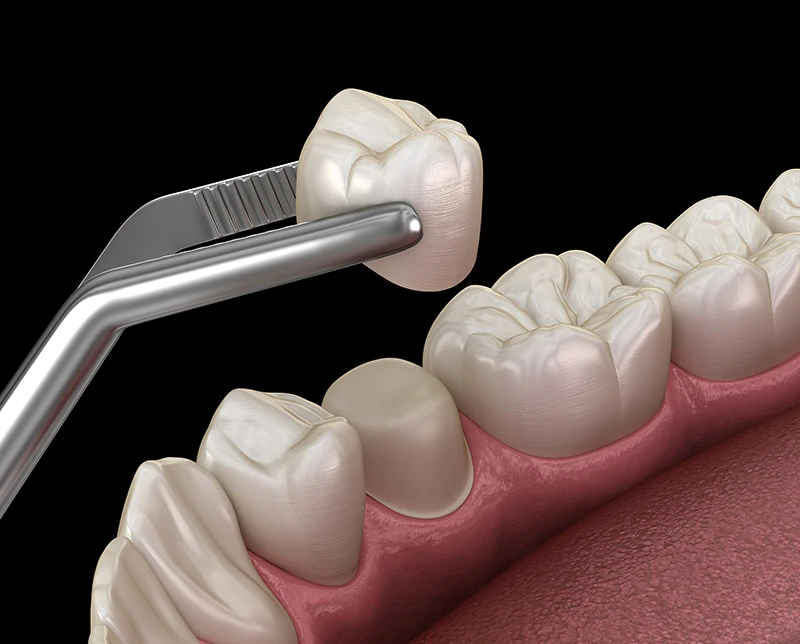 A dental crown is a tooth-shaped restoration that fits over a damaged or weakened tooth. It covers the visible portion of the tooth above the gumline and helps restore its shape, strength, function, and appearance.
Your dentist may recommend restoration with a dental crown when a tooth has been significantly weakened by:
- Extensive tooth decay
- A large filling
- A crack or fracture
- Significant wear
- An injury
- Certain root canal treatments
A crown can also be used to restore a dental implant or, in some cases, improve the appearance of a tooth.
Before placing a crown, your dentist prepares the tooth so the restoration can fit securely. Once placed, the crown functions much like a natural tooth.
What Is a Dental Bridge?
A dental bridge is designed to replace one or more missing teeth. A traditional dental bridge typically consists of an artificial tooth, called a pontic, supported by dental crowns that are attached to the teeth next to the gap.
The supporting teeth are sometimes called abutment teeth. The bridge fills the space left by the missing tooth or teeth and can help restore your ability to chew and speak comfortably.
A bridge can also help prevent neighboring teeth from shifting into the empty space.
Dental Crowns vs. Bridges: What's the Difference?
The biggest difference comes down to what problem the restoration is designed to address.
A crown generally restores a tooth that is still present but has been significantly damaged or weakened.
A bridge generally replaces a missing tooth or teeth by using the surrounding teeth or other structures for support.
In other words, if you have a damaged tooth that can still be restored, your dentist may recommend a crown. If you're missing a tooth, a bridge may be one option for filling the gap.
When Might a Crown Be the Better Choice?
A crown may be appropriate when your natural tooth is still present but doesn't have enough healthy structure to function properly on its own.
For example, if a tooth has a large filling and has become weakened, a crown can cover and protect the remaining tooth structure. A crown may also be recommended for a tooth that has sustained significant damage from decay, an injury, or a fracture.
The goal is to preserve and restore the natural tooth whenever possible.
When Might a Bridge Be the Better Choice?
A bridge may be considered when you're missing one or more teeth and have healthy teeth or other structures that can support the restoration.
Replacing a missing tooth isn't only about appearance. Gaps can affect chewing and may allow neighboring teeth to gradually shift toward the open space.
A dental bridge can fill that gap and help restore function while providing a natural-looking result.
Are Crowns and Bridges Permanent?
Crowns and bridges are designed to be durable, but they aren't necessarily permanent for life. Their longevity depends on factors such as your oral hygiene, bite, diet, habits, the health of the supporting teeth and gums, and regular dental care.
Taking good care of your restoration is important. Brush twice a day, clean between your teeth as recommended by your dental team, and attend regular dental examinations and cleanings.
If you grind or clench your teeth, your dentist may also recommend additional protection, such as a nightguard.
What About Dental Implants?
If you're missing a tooth, a bridge isn't the only restorative option. Dental implants can also be used to replace missing teeth.
An implant replaces the tooth root with a small titanium post that is placed in the jawbone. Once the implant has integrated with the bone, it can support a crown.
Whether an implant, bridge, or another restoration is appropriate depends on your oral health, the condition of the surrounding teeth and bone, your treatment goals, and other individual factors.
Your dentist can discuss the available options with you and explain the advantages and considerations of each.
Dental Crown or Dental Bridge: Which Treatment Is Right for You?
There isn't one restoration that's best for everyone. A dental crown and bridge serve different purposes, so your dentist will first determine what is happening with your teeth and what needs to be restored.
A crown may be recommended to strengthen and protect a damaged natural tooth, while a bridge may be an option for replacing a missing tooth. Other treatments, including dental implants or removable restorations, may also be appropriate depending on your circumstances.
At Mothers' Choice Dental, we can evaluate your oral health and discuss your restorative options with you. Our goal is to help you understand your choices so you can make an informed decision about your dental care.
Have a damaged or missing tooth? Contact Mothers' Choice Dental to schedule an appointment and learn more about the best restorative options for your smile.


